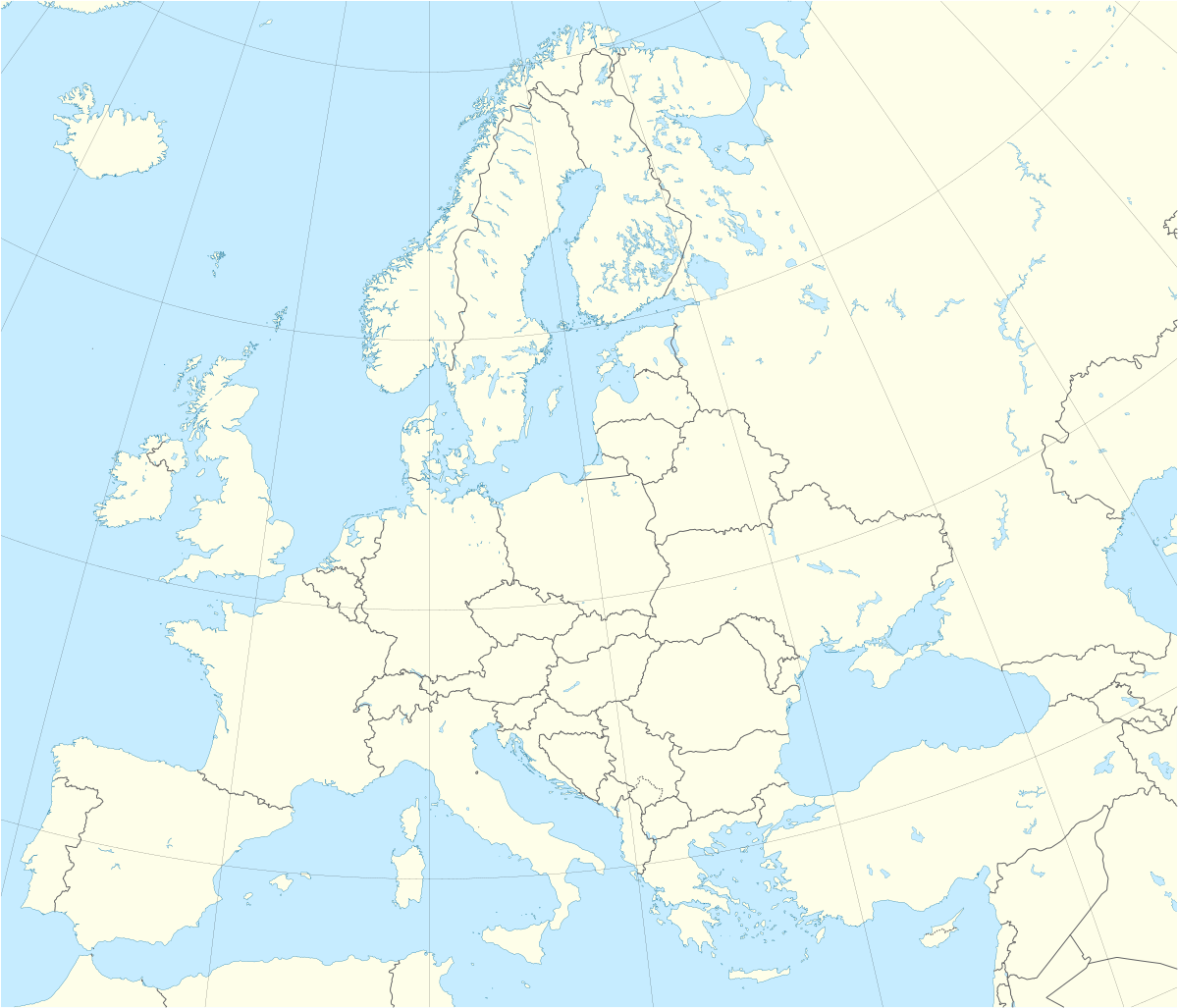
The European Migration Network’s latest overview records 180,211 irregular border crossing detections at the EU’s external borders in 2025. The network says this was 25 percent lower than the 2024 figure.
The number is useful, but it needs careful reading. It is a record of detections at borders. It is not a count of all migrants in Europe, all asylum applicants or every person who made a journey.
What the overview covers
The report draws on contributions from national contact points and EU level sources. It includes developments in asylum, legal migration, labour mobility, return policy and measures against trafficking and exploitation.
It also shows that national situations vary. The share of third country nationals in the population differs widely across countries, as do reception systems, labour needs and the routes that shape border activity.
Why context matters
A fall in detections does not explain a single cause. Weather, enforcement, conflict, visa policy, routes and the decisions of people and smugglers can all affect recorded crossings.
The report is a retrospective source for 2025. It should not be presented as a prediction for 2026 or as a shortcut for judging an individual immigration case.
Primary record